

| CAT No | Product | Size | Price |
|---|---|---|---|
| PB90.21-03 | Air-Dryable Probe 1-Step Mix | 600 x 20 μL Reactions | Contact us |
| PB90.21-10 | Air-Dryable Probe 1-Step Mix | 2000 x 20 μL Reactions (2 x 5 mL) | Contact us |
| PB90.21-50 | Air-Dryable Probe 1-Step Mix | 10 000 x 20 μL Reactions (1 x 50 mL) | Contact us |
| PB90.31-03 | Air-Dryable Probe Mix | 600 x 20 μL Reactions | Contact us |
| PB90.31-10 | Air-Dryable Probe Mix | 2000 x 20 μL Reactions (2 x 5 mL) | Contact us |
| PB90.31-50 | Air-Dryable Probe Mix | 10 000 x 20 μL Reactions (1 x 50 mL) | Contact us |
To view your pricing, please login or register with your quote reference.
Additional Information
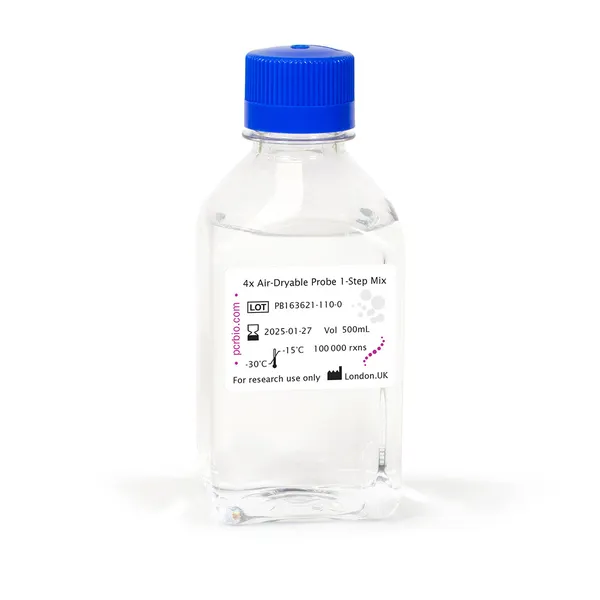
Air-dryable Probe 1-Step Mix includes a 4x qPCR mix free from glycerol with hot-start Taq polymerase, dNTPs, MgCl2, and a blend of excipients ensuring reliable air drying without activity loss. The mix also contains a new version of UltraScript Reverse Transcriptase, tailored for enhanced stability when dry, and RNase inhibitor RiboShield™, making the final mix suitable for both DNA detection by qPCR and 1-step RT-qPCR for RNA targets.
Designed for rapid air-drying, the Air-Dryable Probe 1-Step Mix is intended for use in the development of in-vitro diagnostic (IVD) kits but can be used by anyone wishing to benefit from dried (RT-)qPCR reactions. Air-drying protocols take significantly less time and skill than freeze-drying (lyophilisation) and require very simple equipment. 5 μL of the 4x Probe 1-Step Mix (required for a final reaction volume of 20 μL) can be dried into a gel using a standard laboratory oven in just about 80-90 minutes.
Air-Dryable Probe 1-Step Mix is supplied in a single-tube format to make assay setup for 1-step RT-qPCR probe-based RNA or DNA detection as simple as possible. The mix is specially formulated for air-drying reaction mixes, requiring only the addition of primers and probes before drying. Resuspending the mix is also straightforward, just add the sample and, optionally, water to complete the final reaction volume. A quick shake of the plate will ensure complete recovery of the gel.
Main Benefits of Air-Drying
- Reduced volume and mass of reaction mixes lead to cheaper shipping and storage costs.
- Room temperature stability of the final dried gel eliminates the need for cold chain shipping and storage, simplifying logistics and reducing overall costs.
- Larger input sample volumes can be used. The input sample volume can equal the final reaction volume, ideal for dilute samples (with low target numbers).
- Air drying in ovens is highly accessible, requiring no specialized equipment or expertise, eliminating the need for extra staff or outsourcing the project.
- Enhanced control over the drying process and final product development for small and medium IVD kit developers.
Applications
- Probe-based diagnostic qPCR & RT-qPCR
- Detection of DNA & RNA
- qPCR using TaqMan®, Scorpions® and molecular beacon probes
- qPCR setup for multiplex and singleplex
Technical Specifications
Air-Dryable 1-Step Probe Mix
| Component | 600 reactions | 2000 reactions | 10 000 reactions | 100 000 reactions |
|---|---|---|---|---|
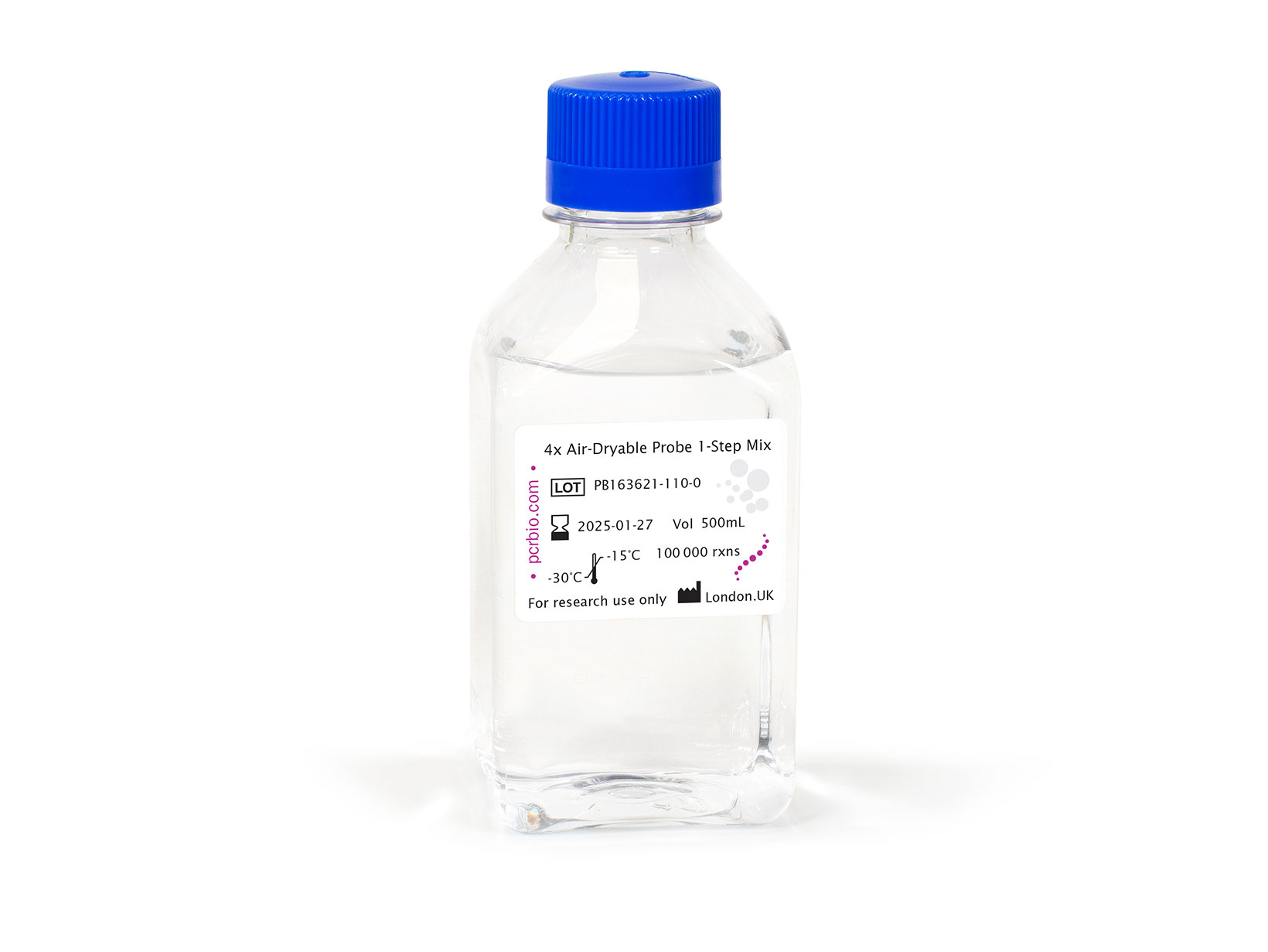
| 4x Air-Dryable Probe 1-Step Mix | 3 x 1 mL | 2 x 5 mL | 1 x 50 mL | 1 x 500 mL |
Air-Dryable Probe Mix
| Component | 600 reactions | 2000 reactions | 10 000 reactions | 100 000 reactions |
|---|---|---|---|---|
| 4x Air-Dryable Probe Mix | 3 x 1 mL | 2 x 5 mL | 1 x 50 mL |
Air-Dryable 1-Step Probe Mix
| Component | 600 reactions | 2000 reactions | 10 000 reactions | 100 000 reactions |
|---|---|---|---|---|
| 4x Air-Dryable Probe 1-Step Mix | 3 x 1 mL | 2 x 5 mL | 1 x 50 mL | 1 x 500 mL |
Air-Dryable Probe Mix
| Component | 600 reactions | 2000 reactions | 10 000 reactions | 100 000 reactions |
|---|---|---|---|---|
| 4x Air-Dryable Probe Mix | 3 x 1 mL | 2 x 5 mL | 1 x 50 mL |
Reaction Information
| Reaction Volume | Storage | |||
|---|---|---|---|---|
| 20 μL | Upon arrival, products should be stored between -30 and -20 °C. If stored correctly, the kit will maintain full activity until the stated expiration date. |
Documents

Frequently Asked Questions (FAQs)
Can I alter the drying conditions?
The drying conditions provided in the user guide are merely an example of cycles tested in our laboratory. When air drying, it is important to achieve a Loss on Drying (LoD) of about 70-75%, which results in a dry gel containing only 5-10% water.
Drying times may vary depending on equipment used. When using this product for the first time with a specific oven, we recommend measuring LoD using several tubes at regular time intervals (e.g., after 60, 70, 80, 90 minutes) to determine the best protocol and achieve the LoD of 74.5 ± 0.5% or 70 ± 1% based on the mix (with or without oligos) and drying equipment used.
Temperatures can also be adjusted, but lower temperatures will require longer times, while higher temperatures risk affecting the integrity of the mix components, so we recommend using 40°C to minimize the possibility of encountering unexpected issues.
Can I lyophilize this mix?
Although we have successfully lyophilized this mix, we do not recommend lyophilization. The excipient content is optimized for air drying, which significantly reduces the stability of the lyophilized product. We recommend using this mix solely for air drying and suggest using our Lyo-Ready product line for lyophilization protocols.
Can I use this 1-Step Probe Mix to detect DNA?
Absolutely. This is our first universal All-in-One mix, meaning it already contains RTase. Importantly, this does not interfere with the performance of our HS Taq polymerase, so it can be used with both RNA and DNA as the templates. We do not recommend simultaneous detection of RNA and DNA targets in a single multiplex reaction.
How can I dissolve the dry gel?
If 5–6 μL of mix (plus oligos) has been air dried per well, simply dissolve the gel with 20 μL of sample in water. Once resuspended, we recommend shaking the sealed plate for about 1 minute to achieve homogenous solution per well.
How should I store dry reaction mixes?
After drying, seal the tubes/plates. This way, they can be stored at room temperature for at least 1.5 years. For extended storage, we recommend storing plates in resealable bags with silica gel packets.
How does this product compare to standard liquid qPCR mixes?
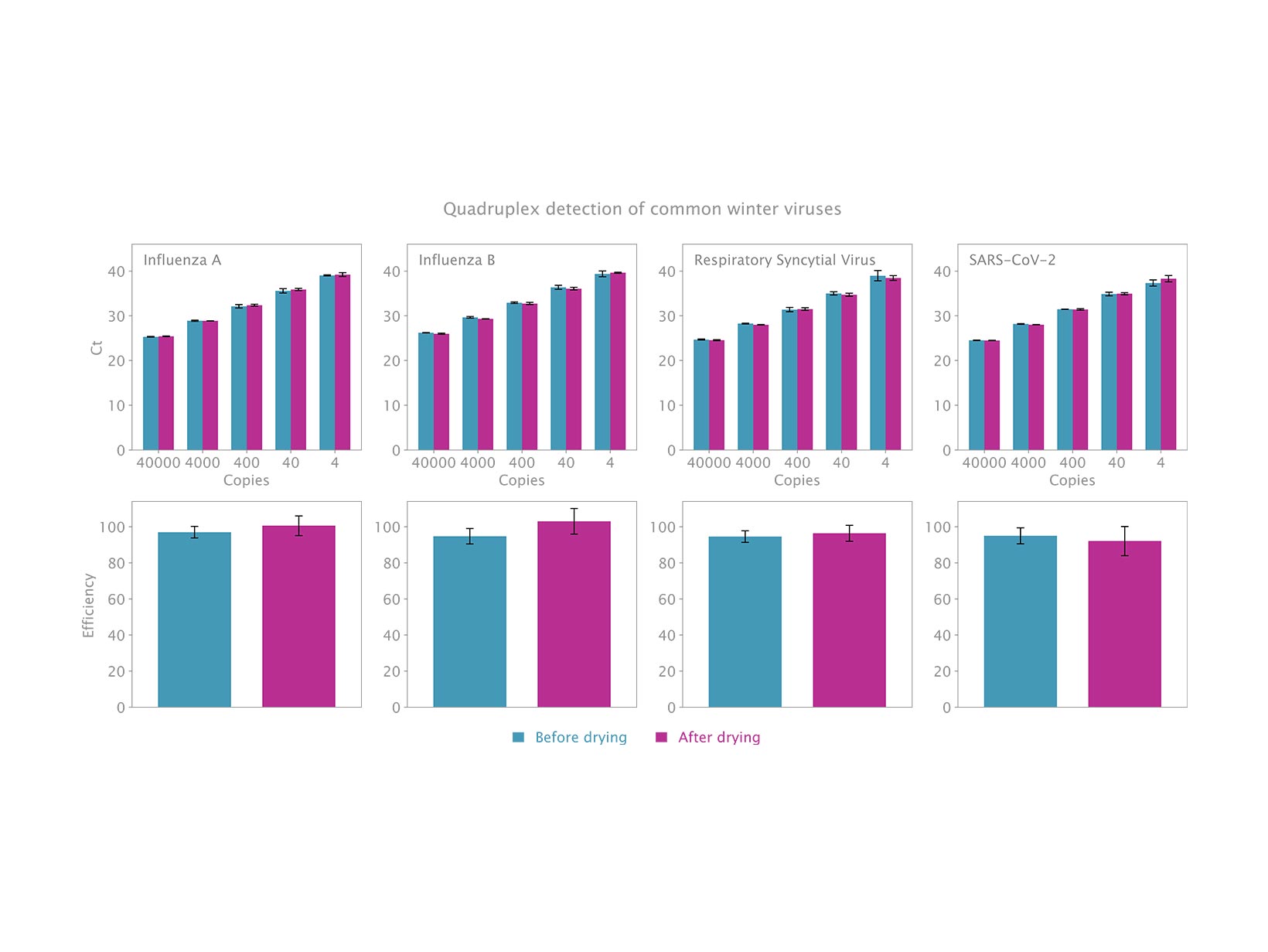
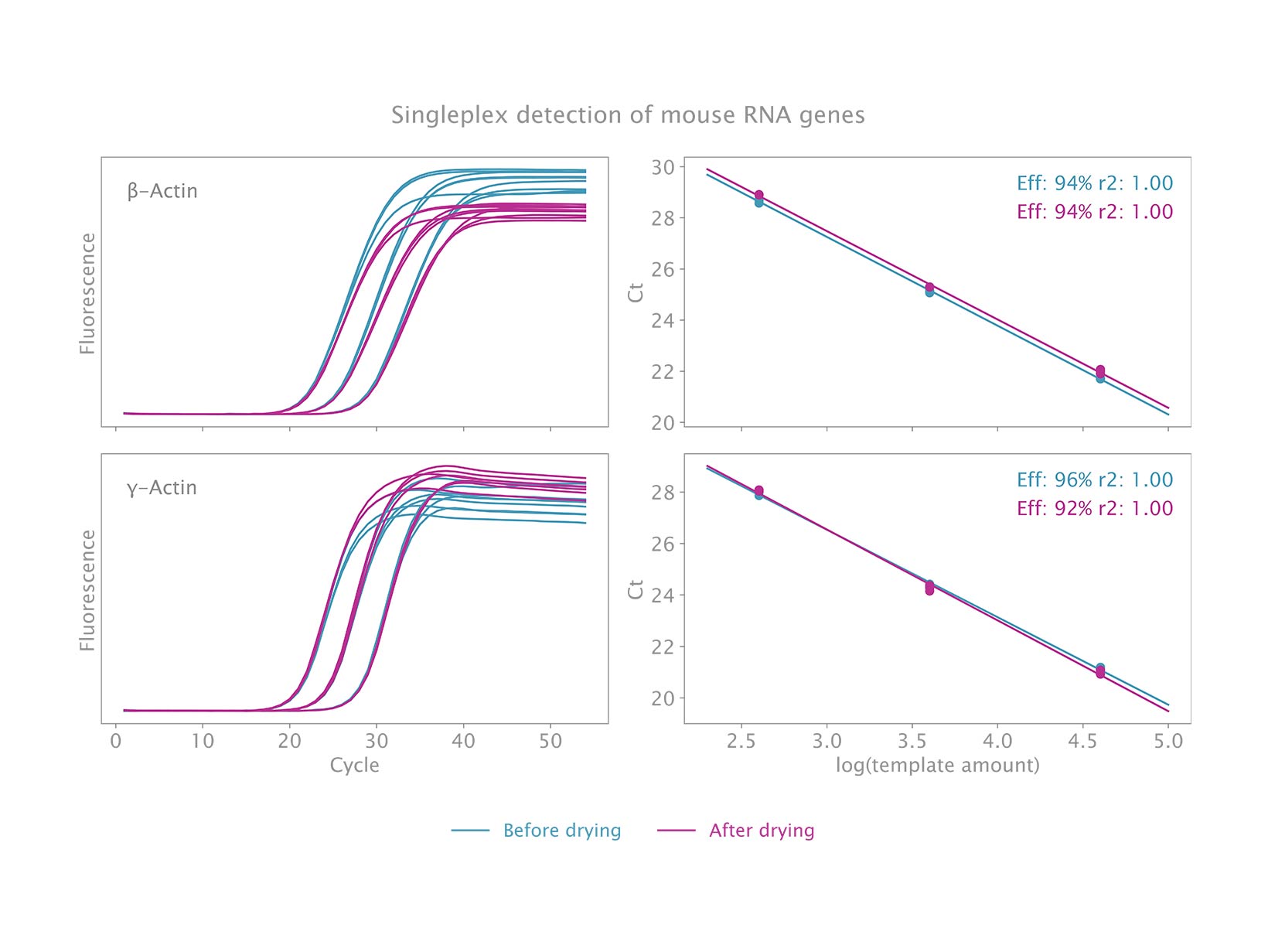
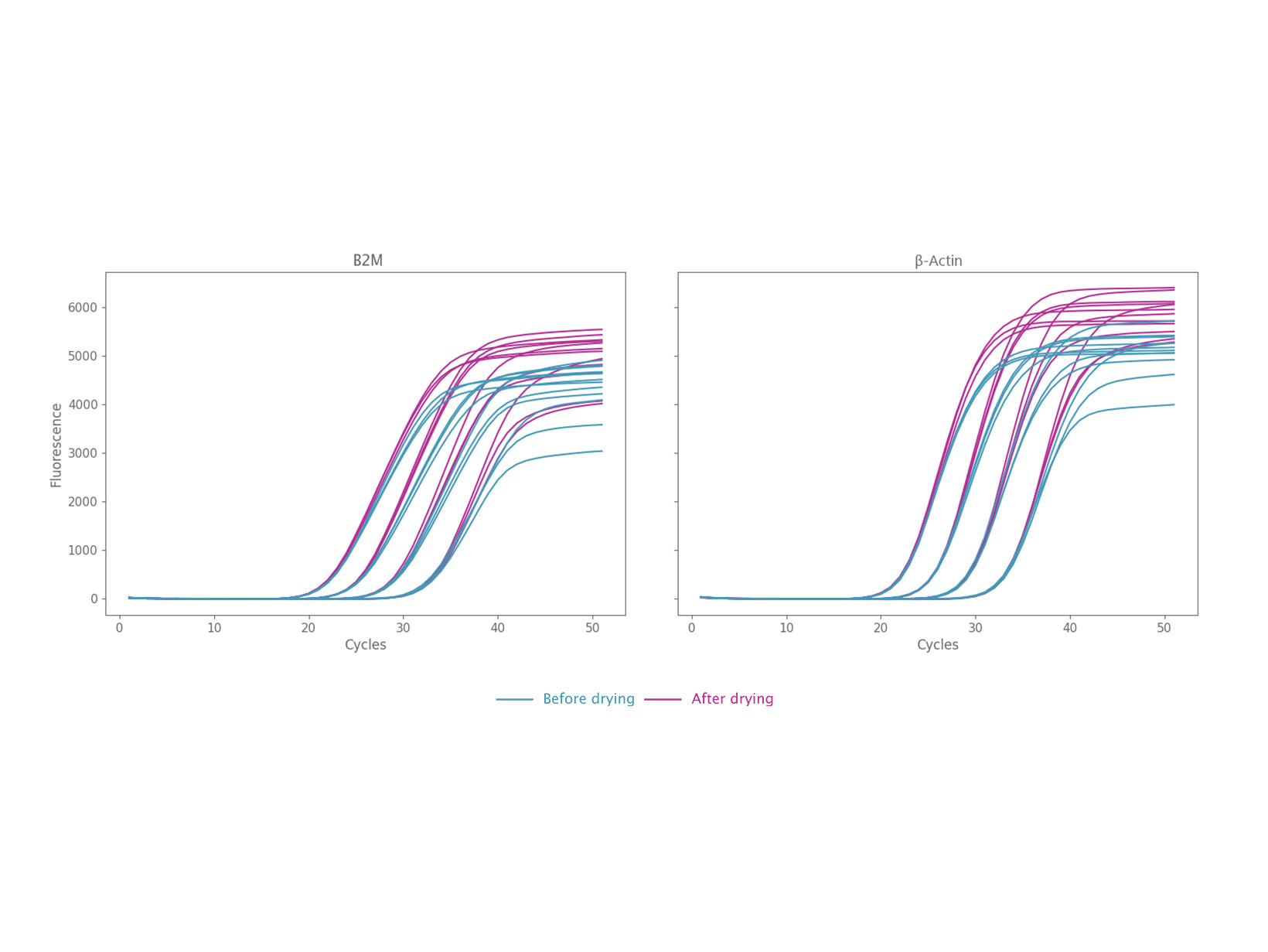
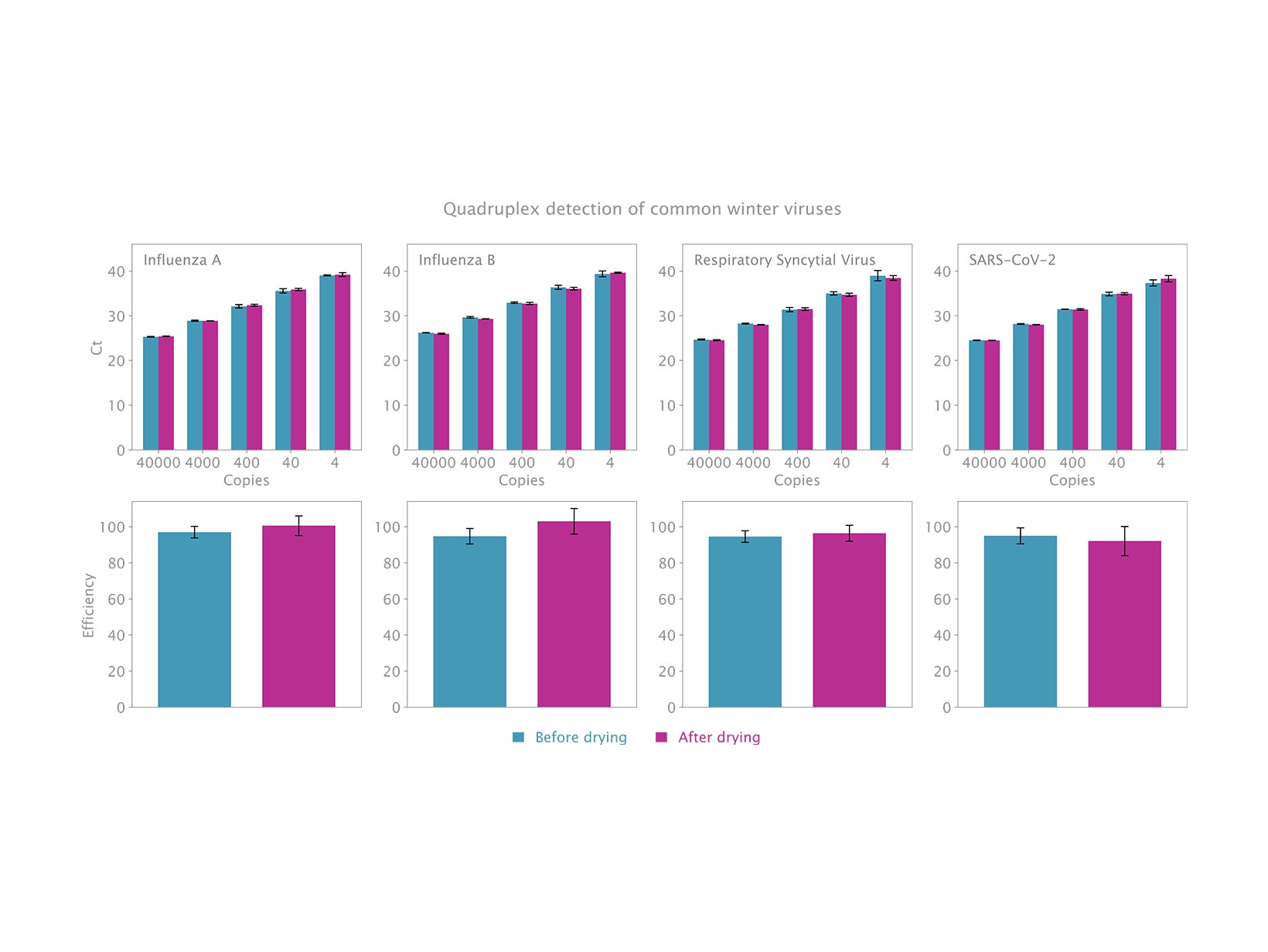
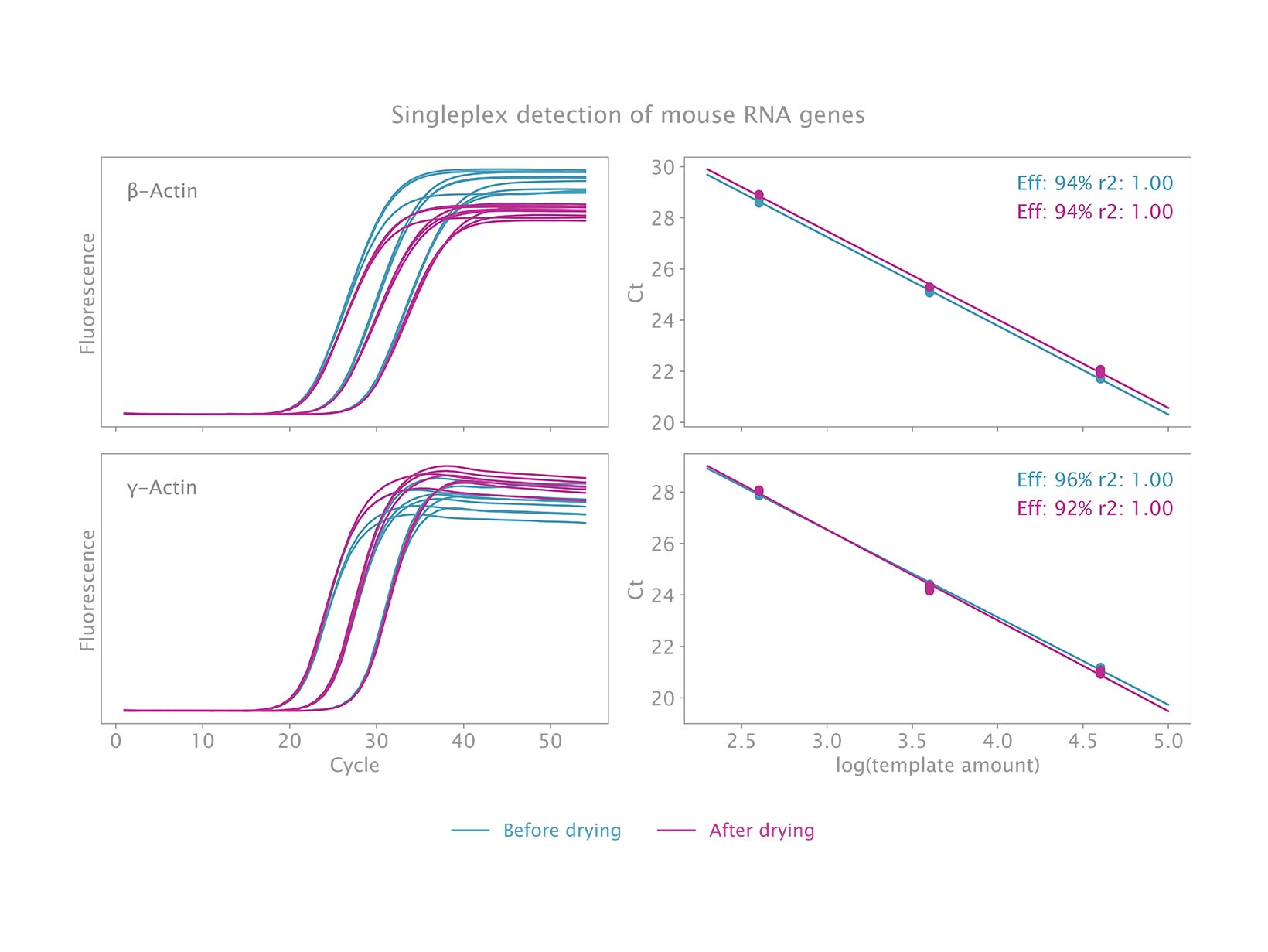
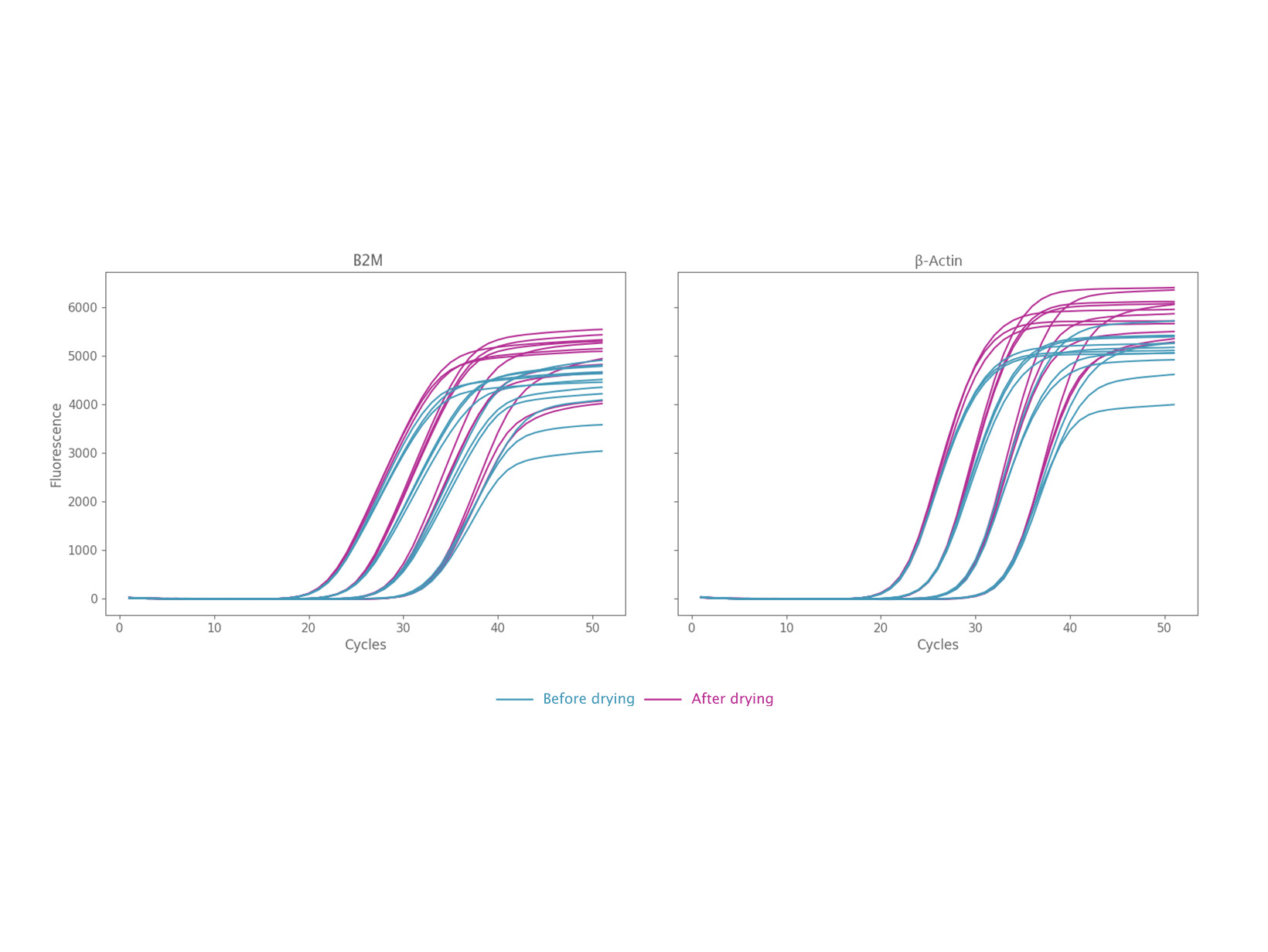
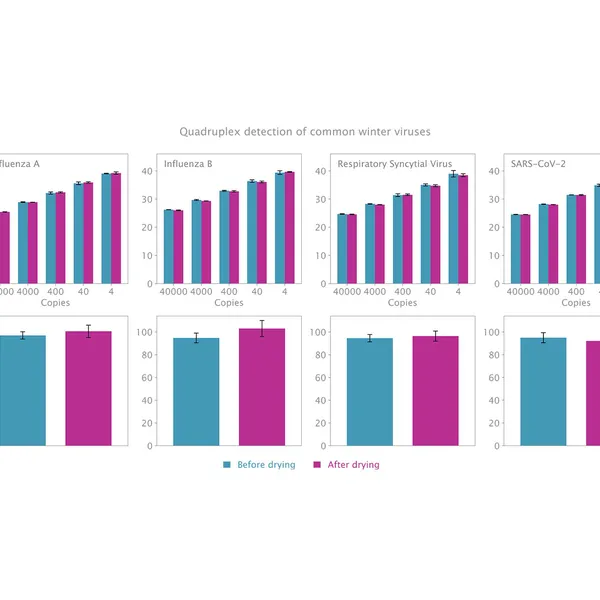
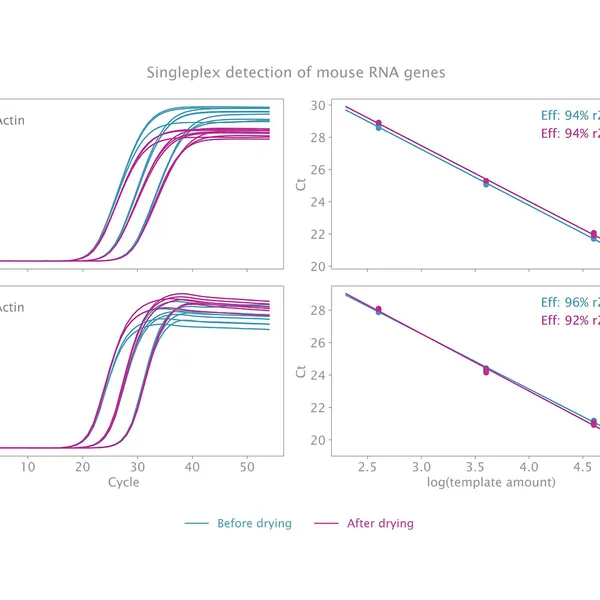
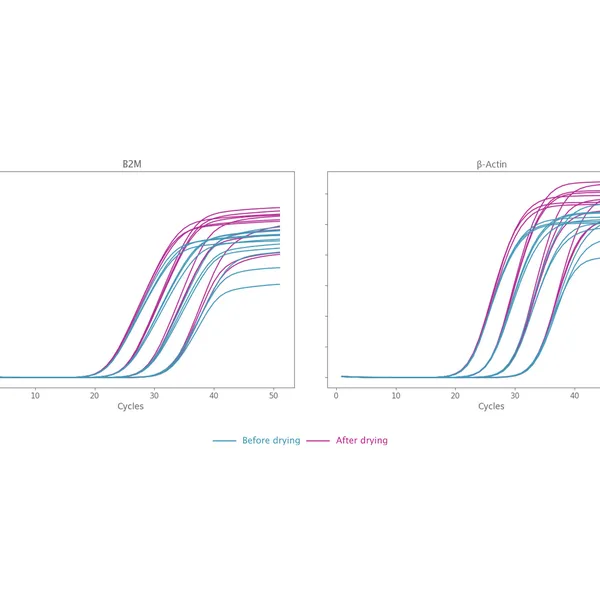
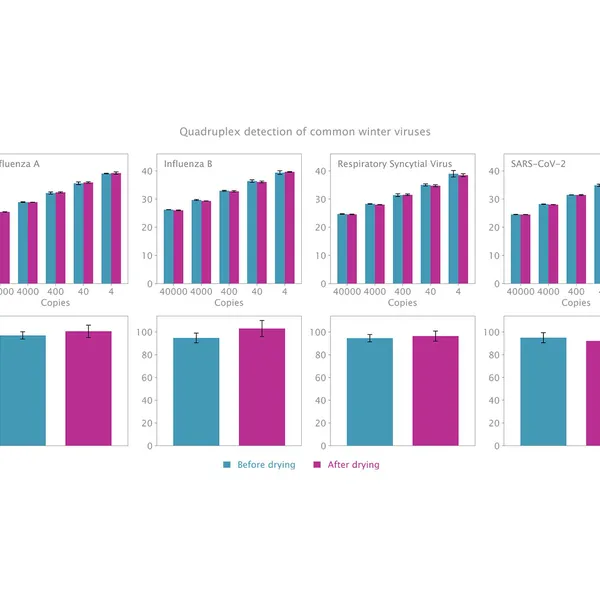
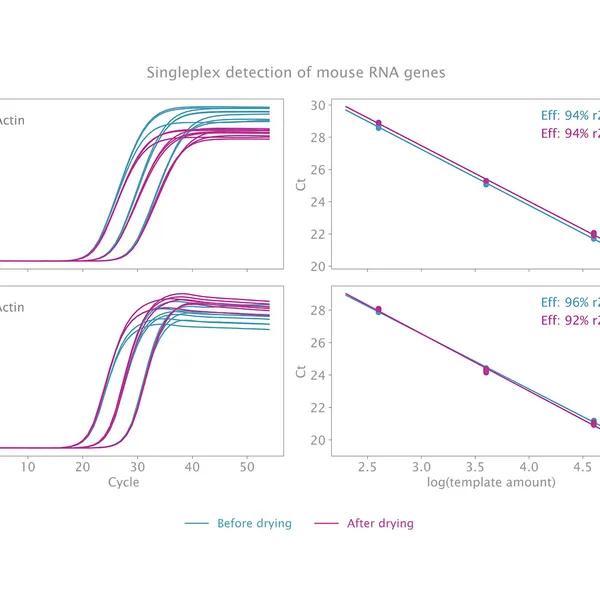
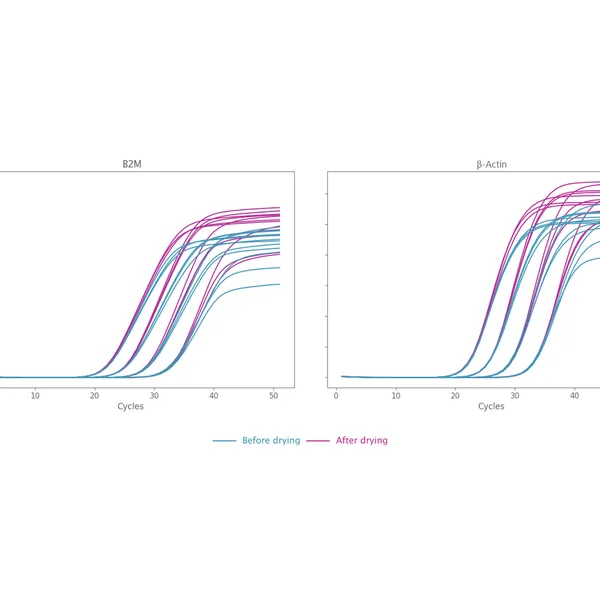
The dry mix behaves similarly to the wet mix, with no significant reduction in fluorescence or delay in amplification. It also demonstrates the same sensitivity and efficiency as all our 1-Step Probe Mixes, detecting up to 4 copies of a viral genome.
How stable is the dry gel?
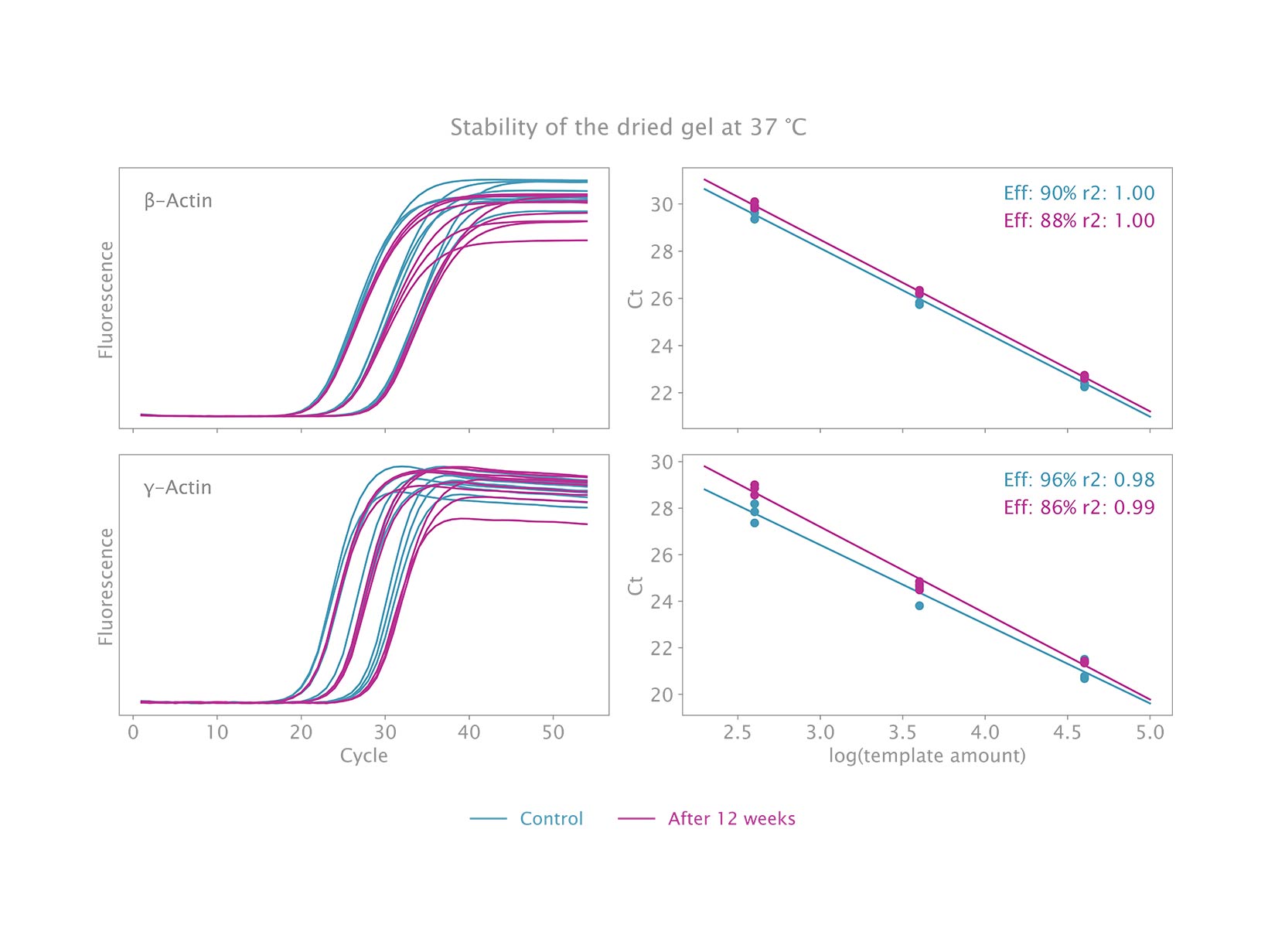
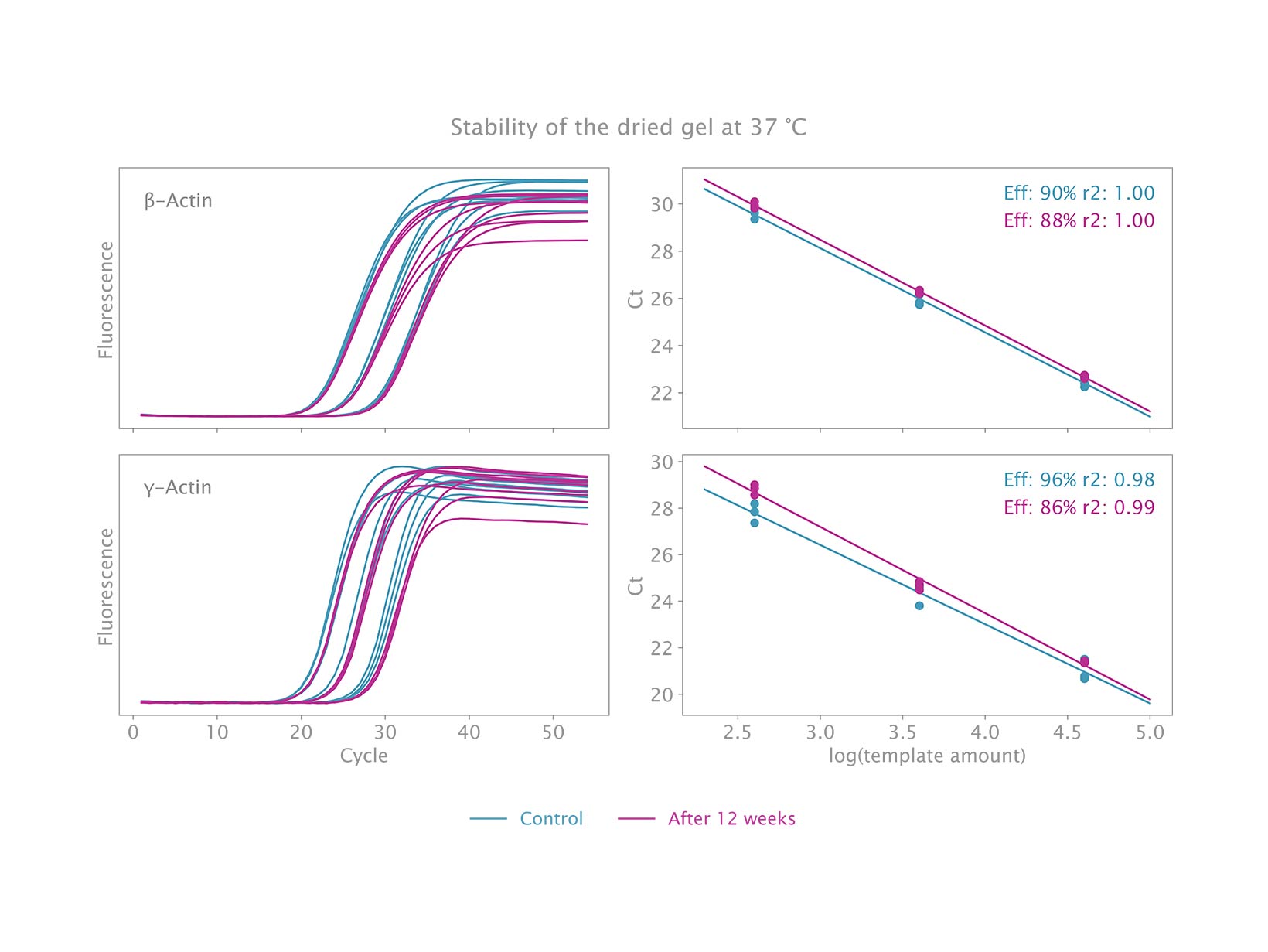
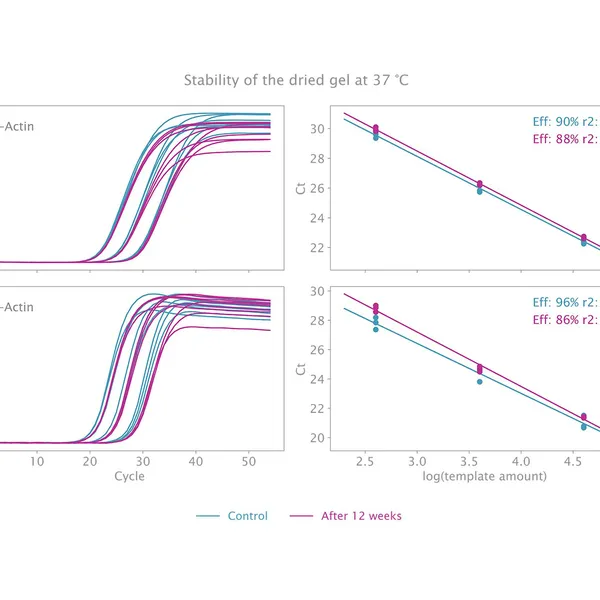
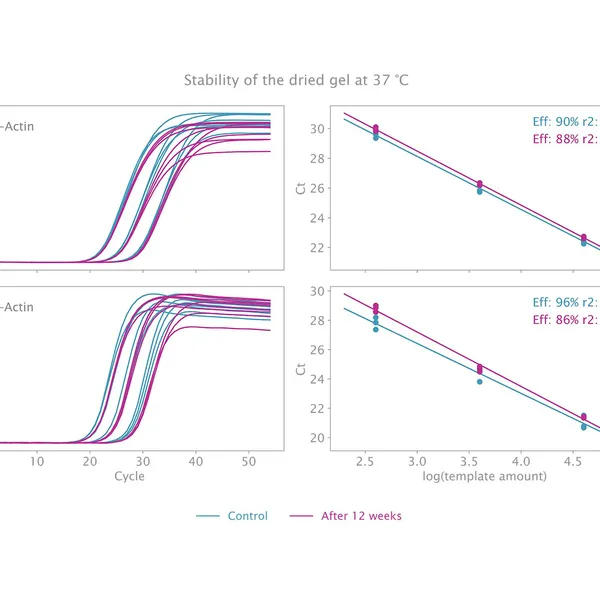
We observe no significant loss of activity (i.e., no reduction in fluorescence and delay of less than 1 Ct in amplification) after incubating the dry gel at 37°C for 3 months.
How many targets can I detect at once (multiplex reaction)?
We have successfully amplified 2 separate sets of 4 targets concurrently. External users have reported successfully conducting more complex multiplex reactions. Please share any feedback and results on this with us at technical@pcrbio.com.
How should I store the mix before drying?
Upon receipt, the product should be stored between -30°C and -15°C. If stored correctly, the product will retain full activity for 12 months.
My reaction mix won't dry, what should I do?
Please check that the equipment used for drying the mix is properly set up, connected to the power supply, and operating correctly.
Also make sure not to exceed the maximum of 5 – 6 μL of mix (including oligos and ROX dye) per well during air drying. Please ensure you are following the instructions provided in the guide. Optimal drying times may vary between different ovens. We recommend optimizing drying conditions for your reaction as needed, starting with the guidelines provided in our manual.
What is the maximum volume I can air dry?
We recommend using the smallest volume possible to minimize protocol time. This means individually air drying 5 μL of the 4x mix (for a 20 μL reaction). If primers, probes, and optionally ROX (if required by the PCR machine) are added before executing the protocol, high concentration stock solutions should be prepared, to add the smallest possible volume to the 4x mix. We advise not to exceed 1 μL additional. Larger volumes will require longer drying times and higher LoD to achieve the same residual water percentage in the dry product. When air drying 6 μL of the mix with primers and probes, the LoD needs to achieve 74.5% ± 0.5%, and so we recommend air drying the mix at 40°C for 80-90 minutes.
What do I do if I want to dry larger volumes?
We do not recommend drying more than 5 – 6 μL of mix (plus oligos) per well as directed in the guidelines provided. Multiple plates can be dried at once to increase production. We do not recommend air drying larger volumes and suggest using lyophilization, with our Lyo-Ready product line.
Read more