

| CAT Code | Product | Size | Price |
|---|---|---|---|
| PB25.85-01 | Clara® Probe 1-Step Purple Mix Lo-ROX | 200 x 20 μL Reactions | Contact us |
| PB25.85-03 | Clara® Probe 1-Step Purple Mix Lo-ROX | 600 x 20 μL Reactions | Contact us |
| PB25.85-05 | Clara® Probe 1-Step Purple Mix Lo-ROX | 1000 x 20 μL Reactions (5 x 1 mL) | Contact us |
| PB25.85-50 | Clara® Probe 1-Step Purple Mix Lo-ROX | 10 000 x 20 μL Reactions (1 x 50 mL) | Contact us |
| PB25.86-01 | Clara® Probe 1-Step Purple Mix Hi-ROX | 200 x 20 μL Reactions | Contact us |
| PB25.86-03 | Clara® Probe 1-Step Purple Mix Hi-ROX | 600 x 20 μL Reactions | Contact us |
| PB25.86-05 | Clara® Probe 1-Step Purple Mix Hi-ROX | 1000 x 20 μL Reactions (5 x 1 mL) | Contact us |
| PB25.86-50 | Clara® Probe 1-Step Purple Mix Hi-ROX | 10 000 x 20 μL Reactions (1 x 50 mL) | Contact us |
| PB25.87-01 | Clara® Probe 1-Step Purple Mix No-ROX | 200 x 20 μL Reactions | Contact us |
| PB25.87-03 | Clara® Probe 1-Step Purple Mix No-ROX | 600 x 20 μL Reactions | Contact us |
| PB25.87-05 | Clara® Probe 1-Step Purple Mix No-ROX | 1000 x 20 μL Reactions (5 x 1 mL) | Contact us |
| PB25.87-50 | Clara® Probe 1-Step Purple Mix No-ROX | 10 000 x 20 μL Reactions (1 x 50 mL) | Contact us |
| PB25.88-01 | Clara® Probe 1-Step Purple Mix Separate-ROX | 200 x 20 μL Reactions | Contact us |
| PB25.88-03 | Clara® Probe 1-Step Purple Mix Separate-ROX | 600 x 20 μL Reactions | Contact us |
| PB25.88-05 | Clara® Probe 1-Step Purple Mix Separate-ROX | 1000 x 20 μL Reactions (5 x 1 mL) | Contact us |
To view your pricing, please login or register with your quote reference.
More Information
1-step Probe qPCR Mix – Clear Results, Reliable Conclusions
Clara® Probe 1-Step Purple Mix allows for high sensitivity, reliability, and ease of use in one-step RT-qPCR and qPCR within diagnostic and basic research applications. It's a universal qPCR mix suitable for all probe technologies, including TaqMan, Scorpions, and molecular beacons. This is the first generation of all-in-one step RT-qPCR mixes, where both DNA polymerase and reverse transcriptase are included in a single mastermix. The Clara® Probe 1-Step Purple Mix is powered by our proprietary Taq hot start DNA polymerase and a specially modified, thermostable high-performance version of UltraScript® Reverse Transcriptase. Rigorous testing during development makes this mix excellently suited for both simplex and multiplex detection with high efficiency and detection sensitivity, whether you are detecting a single or multiple targets simultaneously.
The mix is also suitable for thermal shift analysis (probe hybridization only) and is available without passive reference dye (No-ROX), or with reference dye as Lo-ROX, Hi-ROX, and Separate-ROX formulations. Use our qPCR Selection Tool to find out which ROX variant is compatible with your equipment.
Easy-to-see Purple Dye
The Clara® Probe 1-Step Purple Mix combines the speed, sensitivity, and specificity of the Clara® reagent family with an inert purple dye for easy sample visualization. The dye significantly reduces the overshadowing effect of probe fluorophores, ensuring accurate qPCR results, with minimized handling and pipetting.
The reduction in brightness of probes in Clara® Probe 1-Step Purple Mixes:
FAM: up to 25%
HEX: up to 30%
Tex: up to 25%
Cy5: up to 10%
The percentages represent the reduction in plateau b height (Purple mix vs. base mix) in at least two different reactions.
Maximize Ease
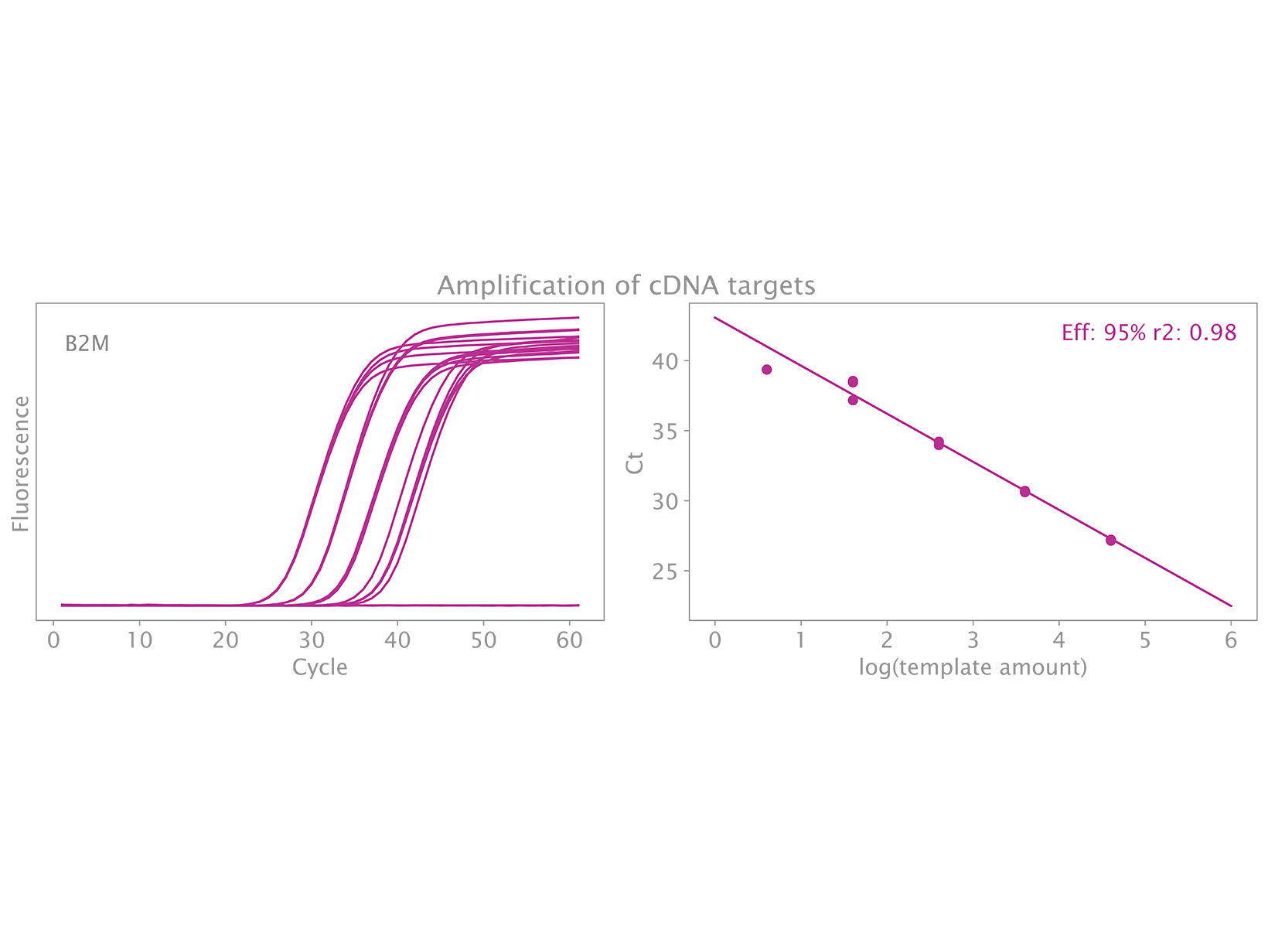
Our proprietary buffer structure (determined through intelligent screening technology) and uniquely engineered UltraScript® RTase allow the mix to be stored in a single tube, as an all-in-one RT-qPCR mastermix. This minimizes the pipetting required for experiment setup, minimizes contamination risk, and saves time. It also means a single reagent suitable for both DNA and RNA amplification, and both target types can be included on the same plate or in the same run. Having a single mix means you do not need different setups when primarily researching RNA targets but still need to quantify DNA.
While users experimenting with large amounts of both target types may prefer specialized reagents for each target type, Clara® Probe Purple Mix is specifically developed for DNA and cDNA probe-based detection.
Improve Real-Time PCR Reliability
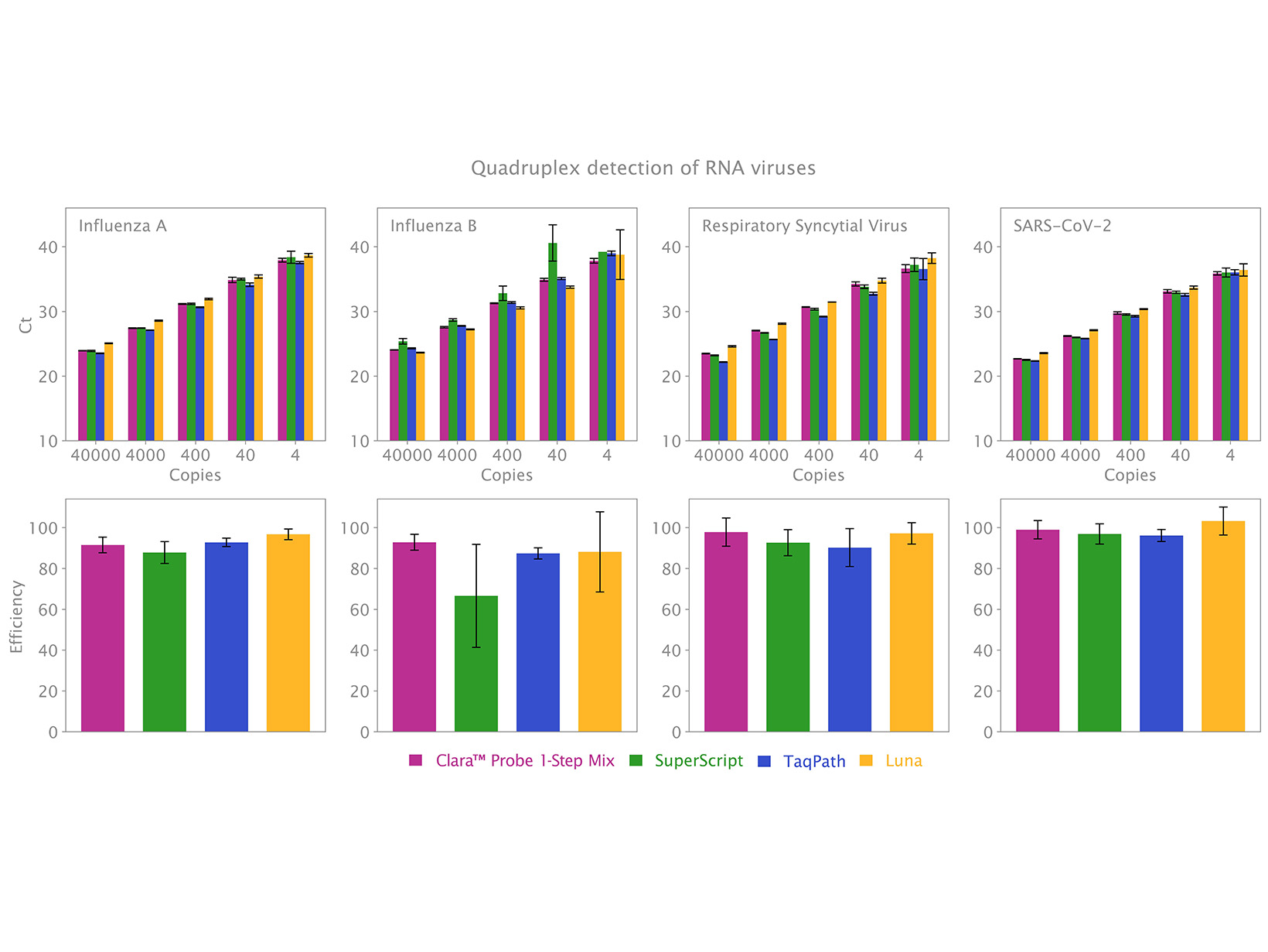
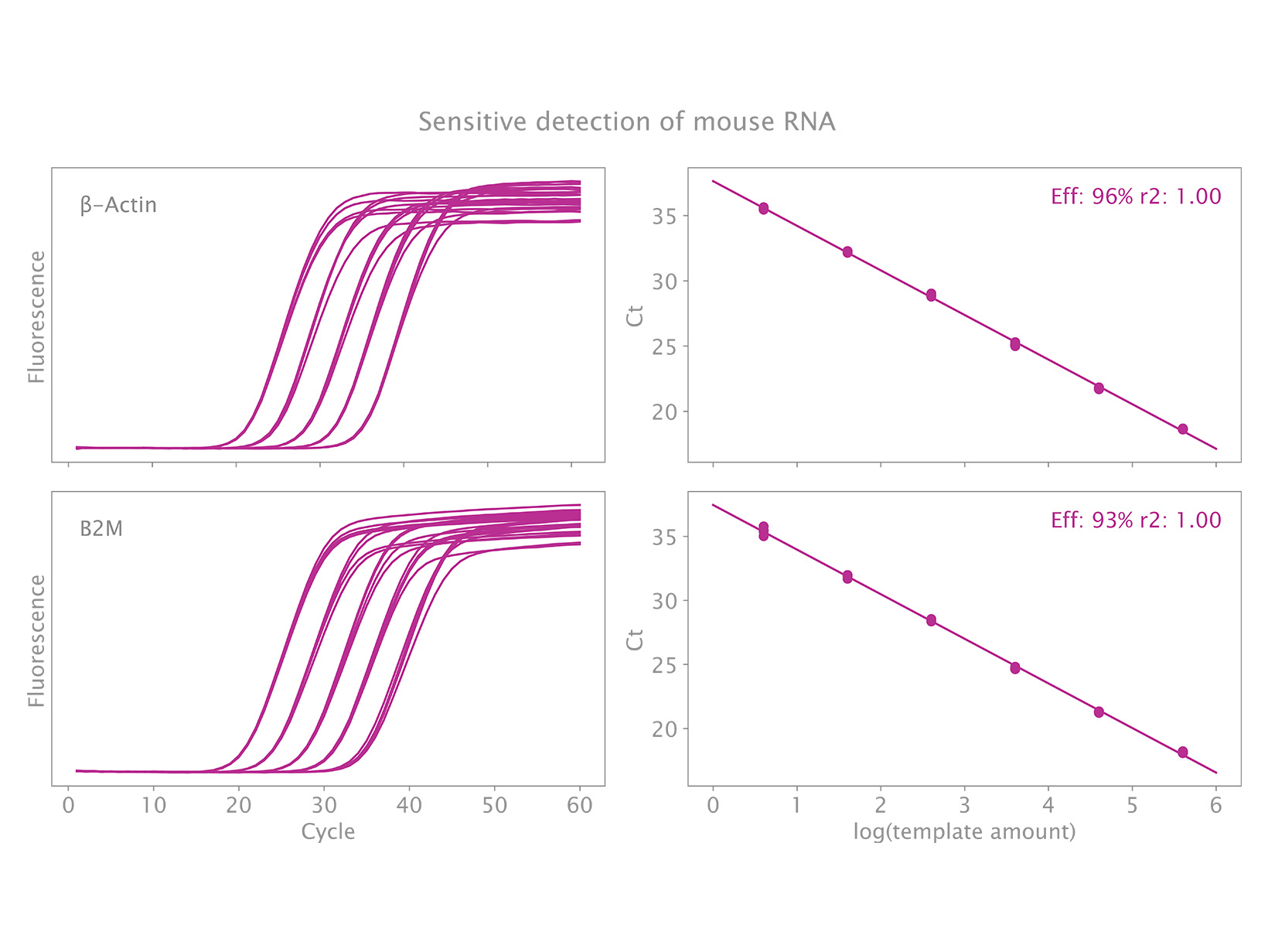
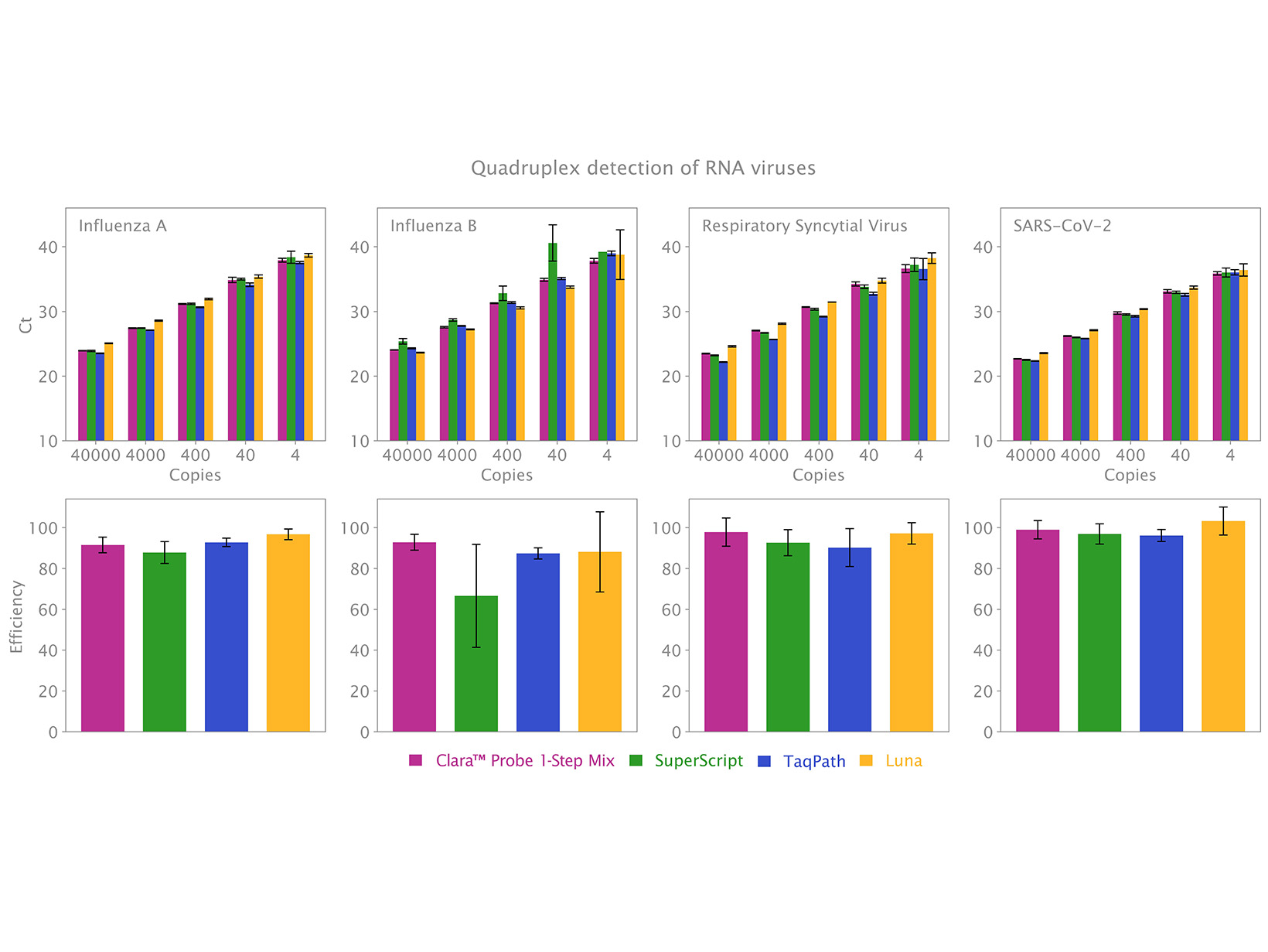
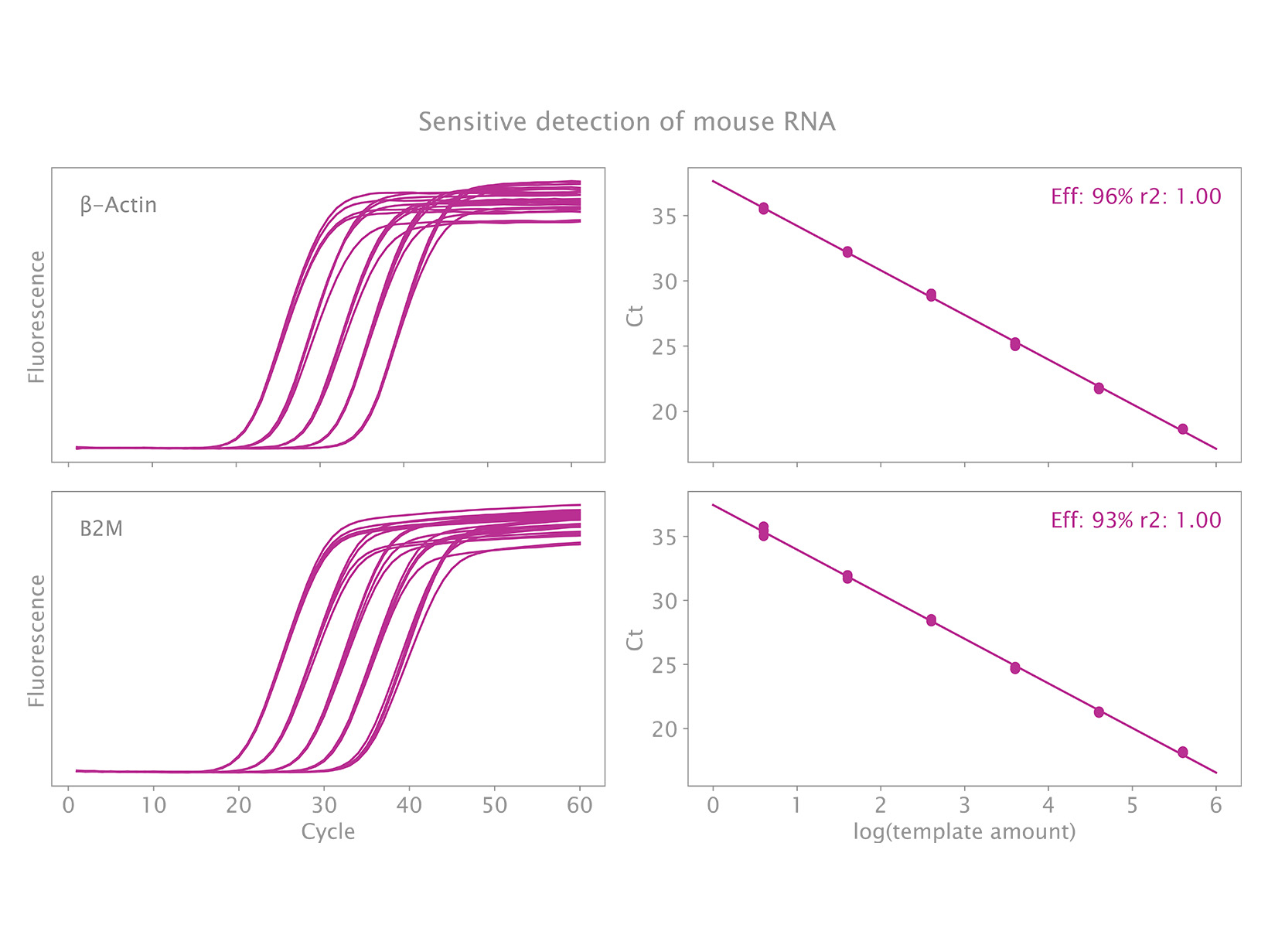
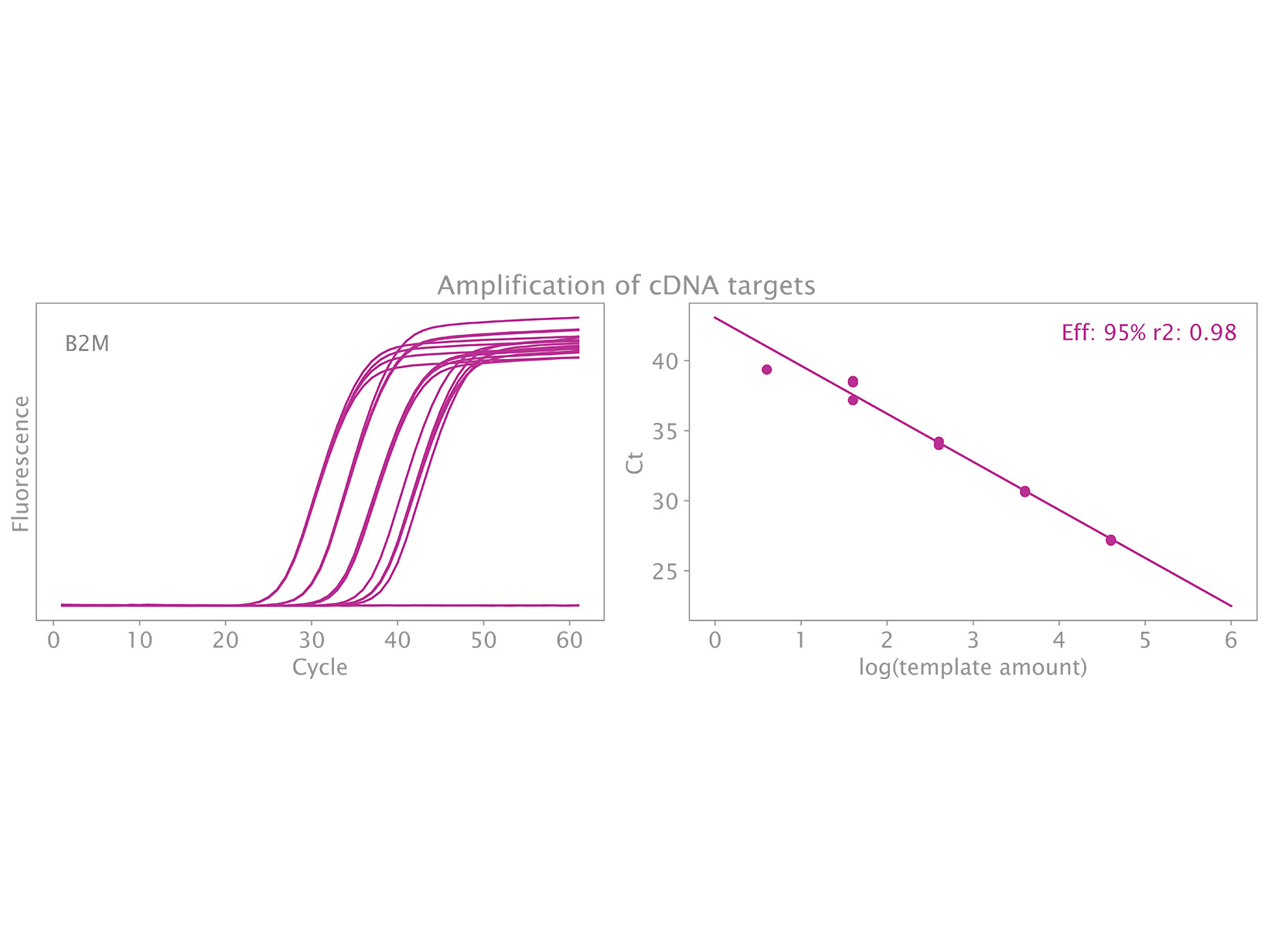
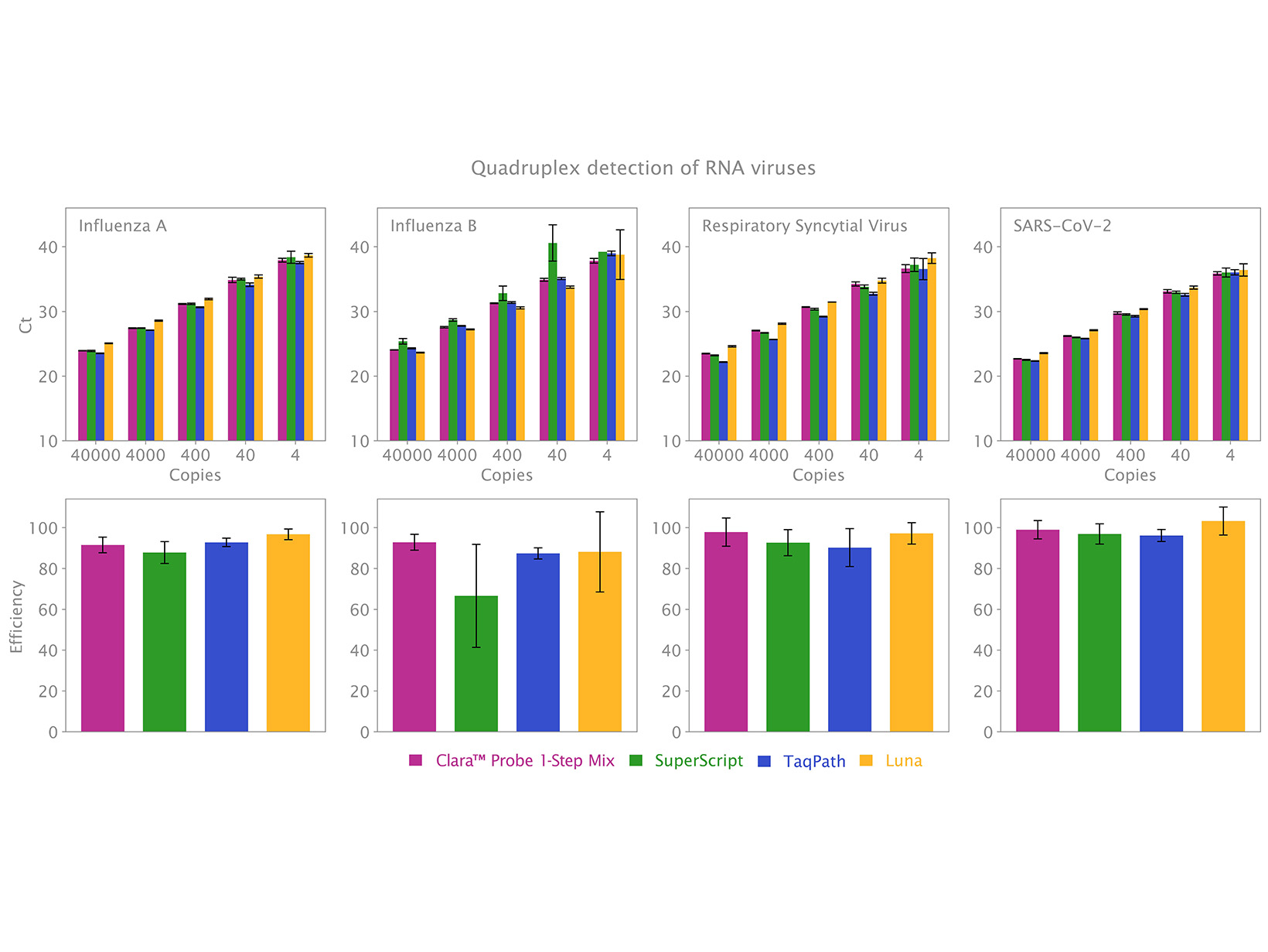
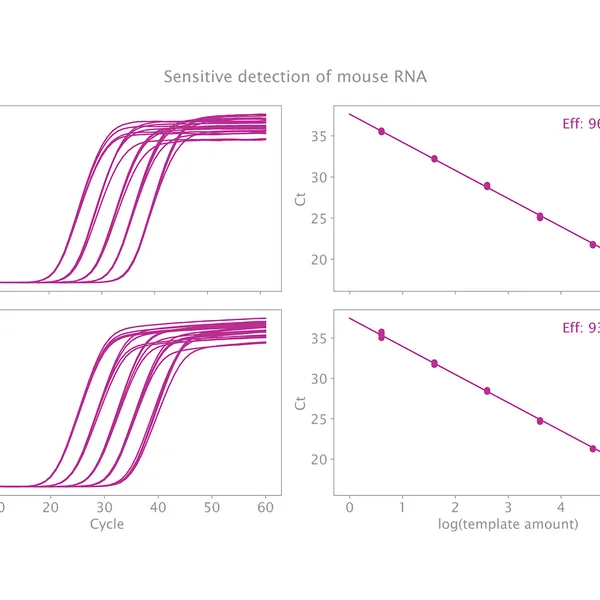
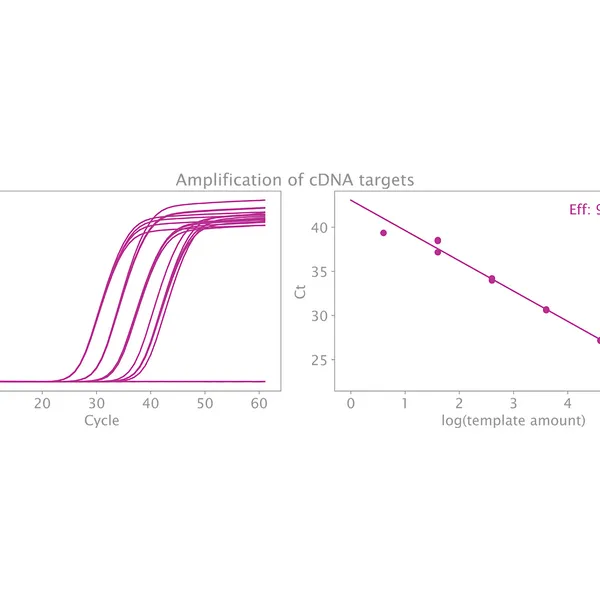
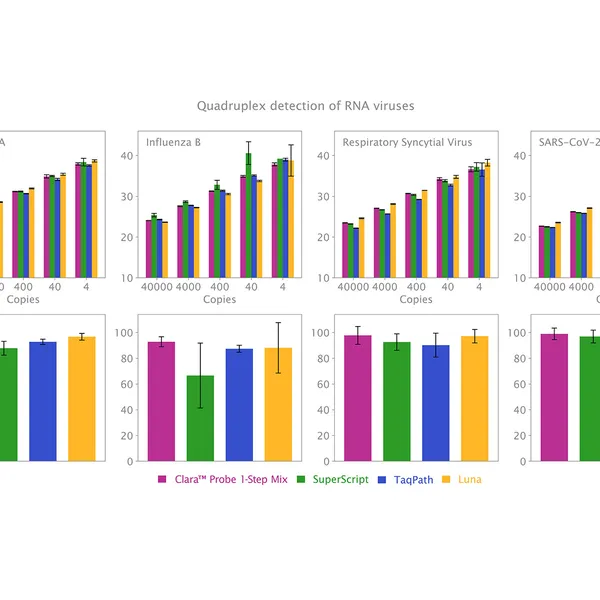
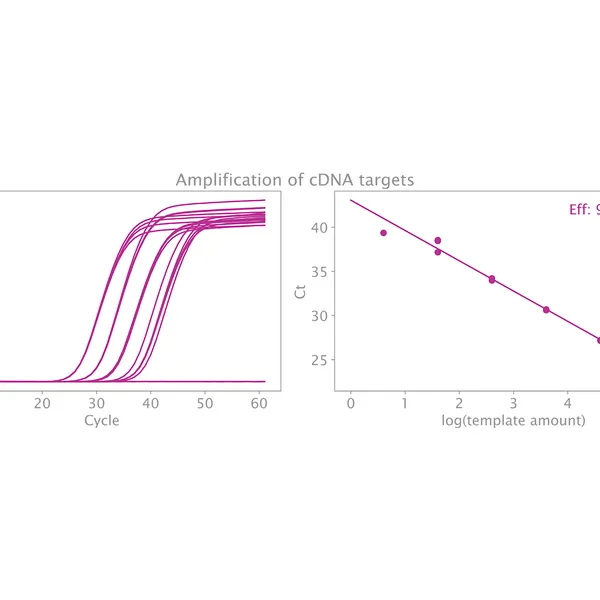
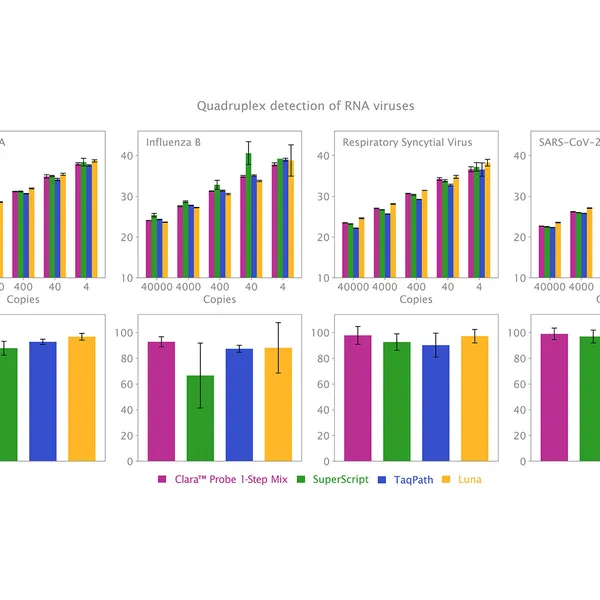
Extensive optimization makes this mix compatible with all types of nucleic acid targets. We have tested it with common RNA viruses, including SARS-CoV-2, RSV, Influenza A and B, standard housekeeping genes like g-actin and GAPDH, as well as DNA targets. The presence of RTase in the mix does not affect the direct amplification of DNA targets, meaning you achieve equally high efficiency whether you are detecting DNA or RNA sequences. The mix is highly stable and shows strong reproducibility between runs, providing reliability to your data and confidence in your experimental conclusions.
Maximize Sensitivity in One-step qPCR
The 4x concentrated format of the Clara® Probe 1-Step Purple Mix provides heightened sensitivity and flexibility by allowing more template to be added to each reaction, and using smaller reaction volumes with confidence. Rapid amplification enables earlier Cts and allows reliable detection down to four target copies per 20 μL reaction (0.8 copies per μL). Achieve superior detection even in the most diluted samples.
Need help with designing probe-based qPCR experiments?
Be sure to design primers and probes carefully. For effective amplification under fast cycling conditions, we recommend selecting an amplicon length between 80 bp and 200 bp. With all manufacturer mastermixes, the shorter the amplicon length, the faster the reaction cycles can be. Amplicon length should not exceed 400 bp. Primers should have a predicted melting temperature around 60 °C, using the default settings of Primer 3 (https://bioinfo.ut.ee/primer3/). For TaqMan probes, choose a probe close to the 5’ primer, avoiding guanosine residues at the end. Ensure an ideal probe-quencher dye pairing combinations, especially in multiplex reactions.
For more information on how to design qPCR experiments and analyze qPCR results, please refer to our technical guide.
Applications
- Gene expression analysis
- Genotyping
- In vitro diagnostic kit development
- Single and multiplex RNA & DNA detection
Specifications
Clara® Probe 1-Step Purple Mix Lo-ROX
| Component | 200 reactions | 600 reactions | 1000 reactions | 10 000 reactions |
|---|---|---|---|---|
| 4x Clara Probe 1-Step Purple Mix Lo-ROX | 1 x 1 mL | 3 x 1 mL | 5 x 1 mL | 1 x 50 mL |
Clara® Probe 1-Step Purple Mix Hi-ROX
| Component | 200 reactions | 600 reactions | 1000 reactions | 10 000 reactions |
|---|---|---|---|---|
| 4x Clara Probe 1-Step Purple Mix Hi-ROX | 1 x 1 mL | 3 x 1 mL | 5 x 1 mL | 1 x 50 mL |
Clara® Probe 1-Step Purple Mix No-ROX
| Component | 200 reactions | 600 reactions | 1000 reactions | 10 000 reactions |
|---|---|---|---|---|
| 4x Clara Probe 1-Step Purple Mix No-ROX | 1 x 1 mL | 3 x 1 mL | 5 x 1 mL | 1 x 50 mL |
Clara® Probe 1-Step Purple Mix Separate-ROX
| Component | 200 reactions | 600 reactions | 1000 reactions | |
|---|---|---|---|---|
| 4x Clara Probe 1-Step Purple Mix No-ROX | 1 x 1 mL | 3 x 1 mL | 5 x 1 mL | |
| 50 μΜ ROX Additive | 1 x 200 μL | 1 x 200 μL | 1 x 200 μL |
Clara® Probe 1-Step Mix AquaPlex
| Component | 200 reactions | 600 reactions | 1000 reactions | 10 000 reactions |
|---|---|---|---|---|
| 4x Clara Probe 1-Step Mix AquaPlex | 1 x 1 mL | 3 x 1 mL | 5 x 1 mL | 1 x 50 mL |
Reaction Information
| Reaction Volume | Storage | |||
|---|---|---|---|---|
| 20 μL |
Upon arrival, store between -30 and -20 °C. If stored correctly, the kit will maintain activity until the expiration date. |
Instrument Compatibility
This product is compatible with all standard and fast qPCR machines. Use our qPCR selection tool to learn which ROX variant is compatible with your device.
Documents
Product Flyer

Manuals
Frequently Asked Questions
Can Clara® Probe 1-Step Mix and Purple Mix be used for both one-step and two-step RT-PCR?
Yes. Clara® Probe 1-Step Mix can amplify target cDNA and RNA equally efficiently. However, as the mix contains RTase, it is ideal for a one-step procedure. We recommend using Clara® Probe 1-Step Mix for one-step procedures and when experiments call for DNA detection in a limited number of samples, and Clara® Probe Mix for two-step protocols and routine DNA detection.
Are products created with Clara® and Clara® Purple mixes resolvable, clonable, and identifiable?
Yes, the PCR products generated from these mixes have attributes identical to PCR products generated from wild-type Taq polymerase. They can be decoded or resolved with standard restriction endonucleases. The products have 3′-d(A) overhangs and can be used for TA cloning or trimmed blunt or resolved with restriction enzymes before cloning. For best results, we recommend purifying the PCR products using any standard PCR purification kit.
Do Clara® Probe Mix and Clara® Probe 1-Step Mix contain FAM dye?
No. Besides ROX (if in kit), there are no other dyes in our mixes. Therefore, you can use any fluorophore-linked probe for your reaction.
Is it normal if the fluorescence of Clara® Probe Mix and Clara® Probe 1-Step Mix differs from the fluorescence obtained with competitors' products?
Different products may yield different fluorescence levels. However, this does not affect the accuracy of quantification, and the Ct values will not be significantly different between products.
Is storing sample DNA in 1x TE buffer (10 mM Tris-HCl / 1 mM EDTA) compatible with subsequent qPCR using Clara® Probe Mix and Clara® Probe 1-Step Mix?
Yes, this storage buffer is compatible. EDTA will chelate some magnesium in the mix, but not enough to affect the reaction.
What are the ROX concentrations in Clara® Probe Mix, Clara® Probe 1-Step Mix, and their respective purple mixes?
Clara® Probe Purple Mixes and Clara® Probe 1-Step Purple Mixes contain passive reference dye in several formulations, each with different passive reference dye concentrations:
Lo-ROX mixes (PB20.65 and PB25.85) contain 200 nM ROX.
Hi-ROX mixes (PB20.66 and PB25.86) contain 2 µM ROX.
No-ROX mixes (PB20.67 and PB25.87) do not contain ROX.
Separate-ROX mixes (PB20.68 and PB25.88) include a separate tube of 50 µM ROX additive. This allows you to choose the ROX concentration you want to use.
You can use our qPCR Selection Tool under the Resources menu to determine which of our mixes is best aligned with your qPCR machine.
Do you have any troubleshooting recommendations if there are non-specific products in my qPCR?
There are several options to consider when optimizing the reaction:
- Reduce the annealing/extension time to 5 seconds
- Raise the annealing/extension temperature from 60 to 65°C
Dilute initial DNA sample with 5ng DNA and use a 10x sample dilution series. Besides running these on a gel to see if non-specific products persist, reaction performance can be calculated with the qPCR machine’s software after performing the sample dilution series. If the efficiency is between 90 – 110%, the amplicon is doubling each cycle.
Is the mix effective for micro RNA samples?
Yes, Clara® Probe 1-Step Mix can be used for micro RNA samples. Although we do not sell dedicated kits, all our RTases can be used for miRNA quantification and analysis.
We recommend using one of two methods:
- Use general RT primers and append poly(A) or poly(U) tails (e.g., using poly(U)-polymerase), then perform cDNA synthesis using general primers1,2.
- Use specific RT primers and skip the tailing step1, 3-5.
If unfamiliar with the details of those methods, please refer to the literature list below, serving as a guide.
- Dave, V. P. et al. Amplification and detection technologies for microRNA: opportunities and challenges for point of care diagnostics. Lab Invest 99, 452-469, doi:10.1038/s41374-018-0143-3 (2019).
- Mei, Q. et al. An easy and specific assay for microRNA quantification using an optimized RT-qPCR method. PLoS One 7, e46890, doi:10.1371/journal.pone.0046890 (2012).
- Chen, C. et al. Real-time quantification of microRNAs by stem-loop RT-PCR. Nucleic Acids Res 33, e179, doi:10.1093/nar/gni178 (2005).
- Raymond, C. K., Roberts, B. S., Garrett-Engele, P., Lim, L. P. & Johnson, J. M. Simple, quantitative primer-extension PCR assay for direct monitoring of microRNAs and short-interfering RNAs. RNA 11, 1737-1744, doi:10.1261/rna.2148705 (2005).
- Androvic, P., Valihrach, L., Elling, J., Sjoback, R. & Kubista, M. Two-tailed RT-qPCR: a novel method for highly accurate miRNA quantification. Nucleic Acids Res 45, e144, doi:10.1093/nar/gkx588 (2017).
View more